Sometimes the best way to understand what opportunities are available is to experience them firsthand.
Recently, our teen and adult clients traveled to Daytona Beach to visit facilities operated by the Florida Division of Blind Services (DBS). During the trip, our group explored the Braille and Talking Book Library along with residential, independent-living, and vocational training areas on the Daytona campus.
For our clients, it was an opportunity not only to learn about available services, but also to imagine where those services might take them next.
A Library Designed Around Accessible Reading
One of the highlights of our visit was the Florida Bureau of Braille and Talking Book Library.
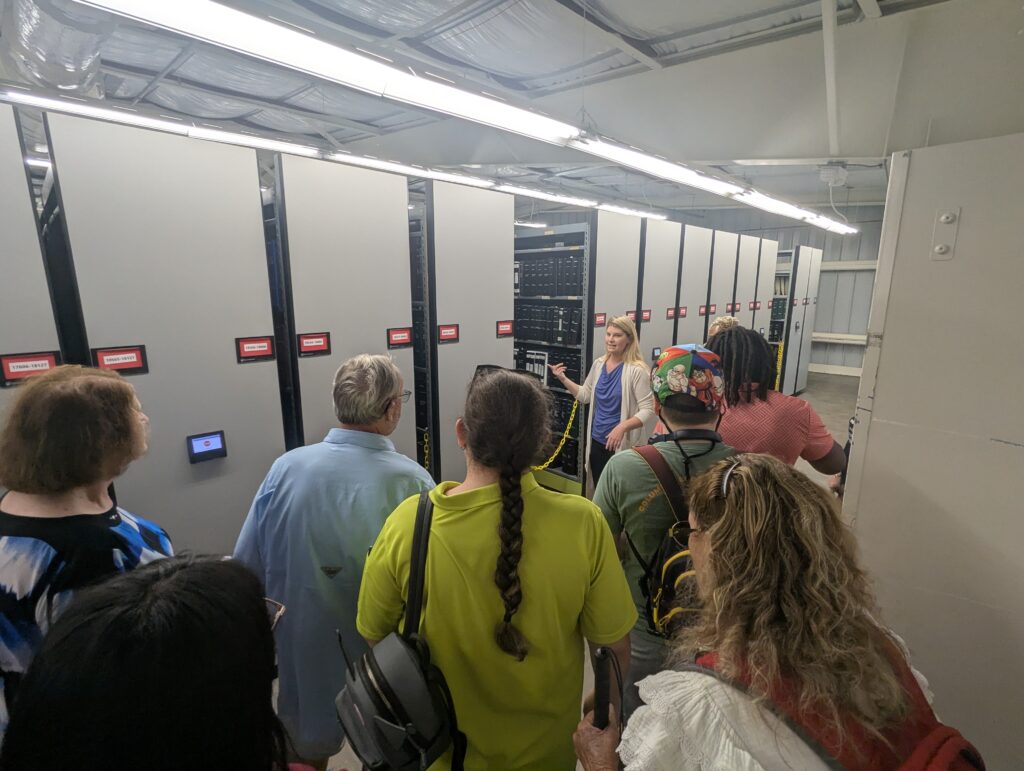
The Daytona Beach facility serves as Florida’s regional library through the National Library Service for the Blind and Print Disabled and houses an extensive collection of books and other materials in Braille and recorded formats.
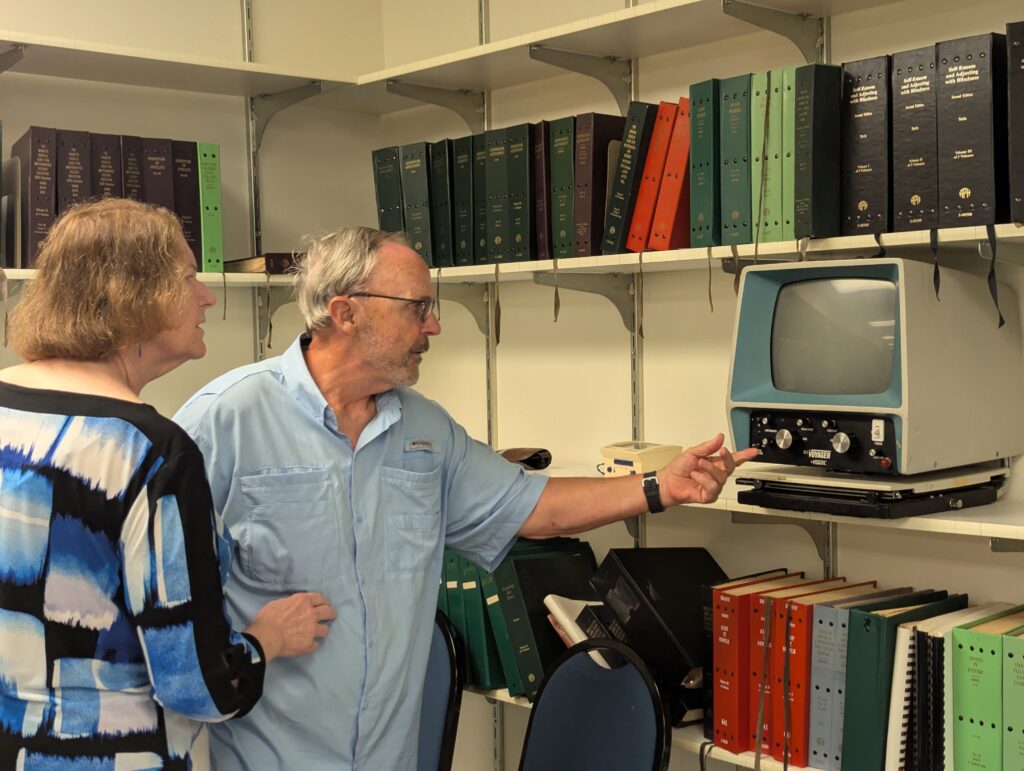
During our tour, we were able to walk through the library’s collection and see rows upon rows of Braille books.
We also learned something important: these services aren’t limited to people who are blind or have low vision.
The program is available to eligible people who cannot effectively read or use standard printed materials because of a visual, physical, or reading disability. That can include someone with dyslexia or another qualifying reading disability, as well as someone whose physical disability makes it difficult to hold a book or turn its pages.
That broader definition of accessible reading was an important part of what our group learned during the visit.
Behind the Scenes of an Audiobook
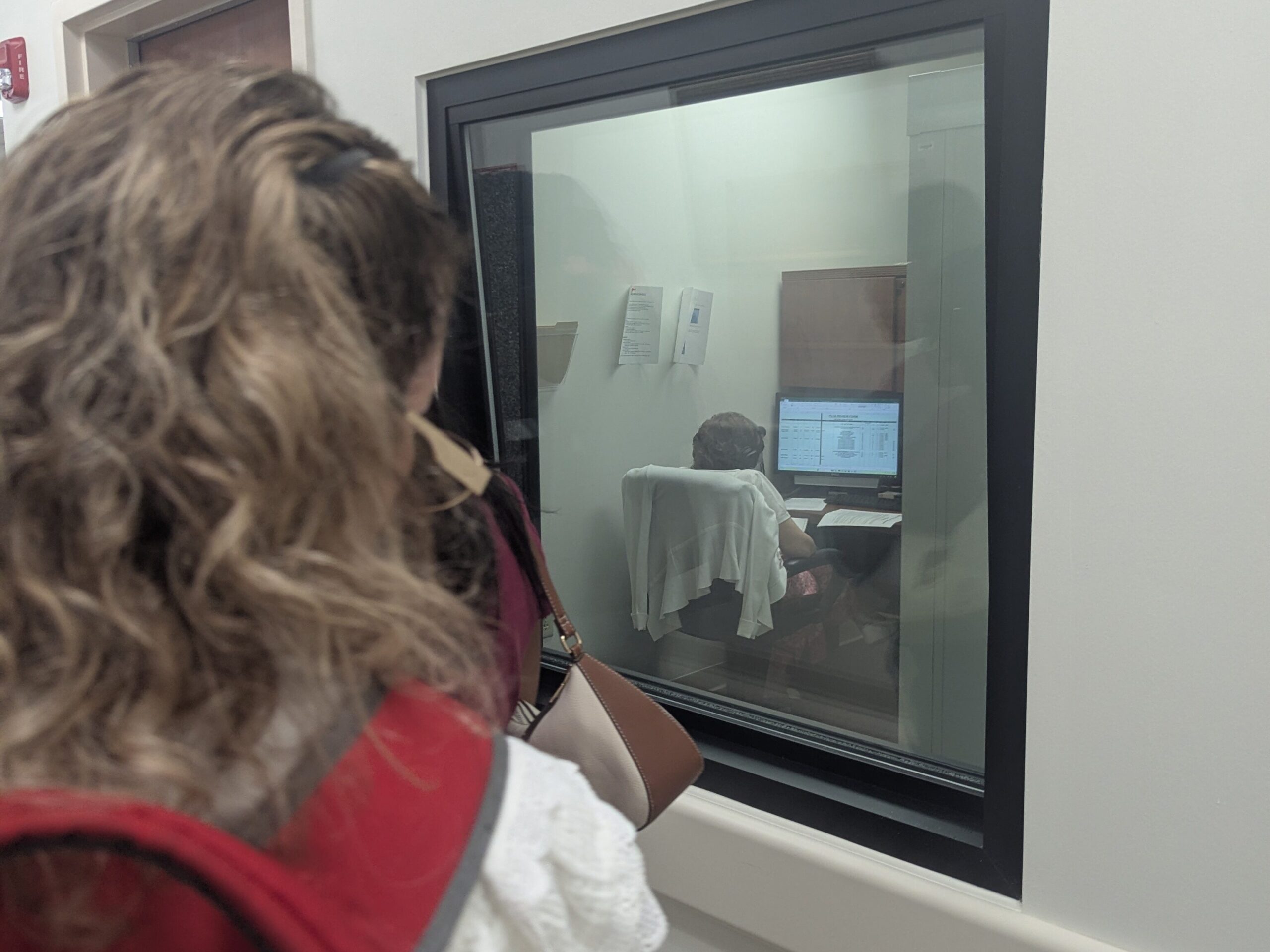
We also got a behind-the-scenes look at how accessible books are produced.
The Daytona facility includes a recording studio where volunteers record books for the library’s collection. The library particularly highlights Florida authors and Florida-centric subjects among its locally produced materials. Once completed, locally recorded titles can be made available to eligible readers through accessible formats and services such as the Braille and Audio Reading Download (BARD) program.
Seeing the recording facilities gave our clients a different perspective on just how much work goes into making literature accessible.
Learning Skills for Greater Independence
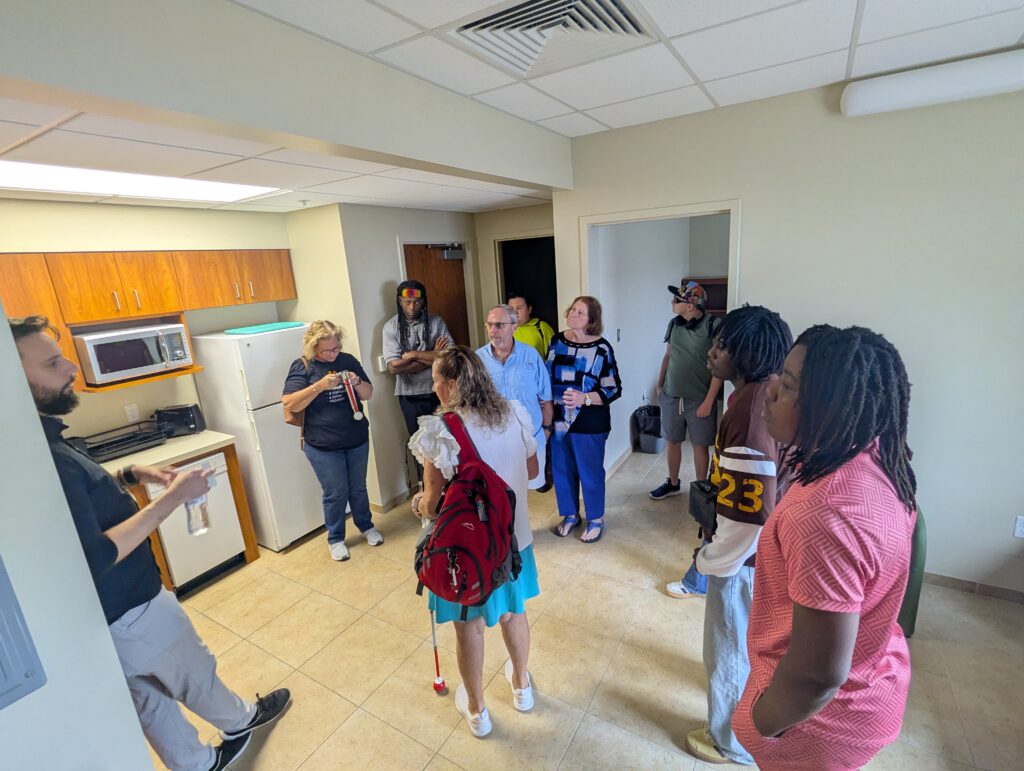
Our tour continued into other areas of the Daytona campus, where we learned about programs designed to help people who are blind or have low vision develop greater independence.
Depending on an individual’s goals and program, training can include orientation and mobility, independent living skills, assistive technology, vocational training, career guidance, job placement, and on-the-job training.
For our teens, this part of the tour was especially exciting.
A few began asking questions about what it might be like to participate in programs there after high school. Instead of talking about transition services only as something in their future, they were able to walk through the campus, see the living areas and training spaces, and meet people involved in the programs.
That made those possibilities much more tangible.
Turning Training Into Business Opportunities
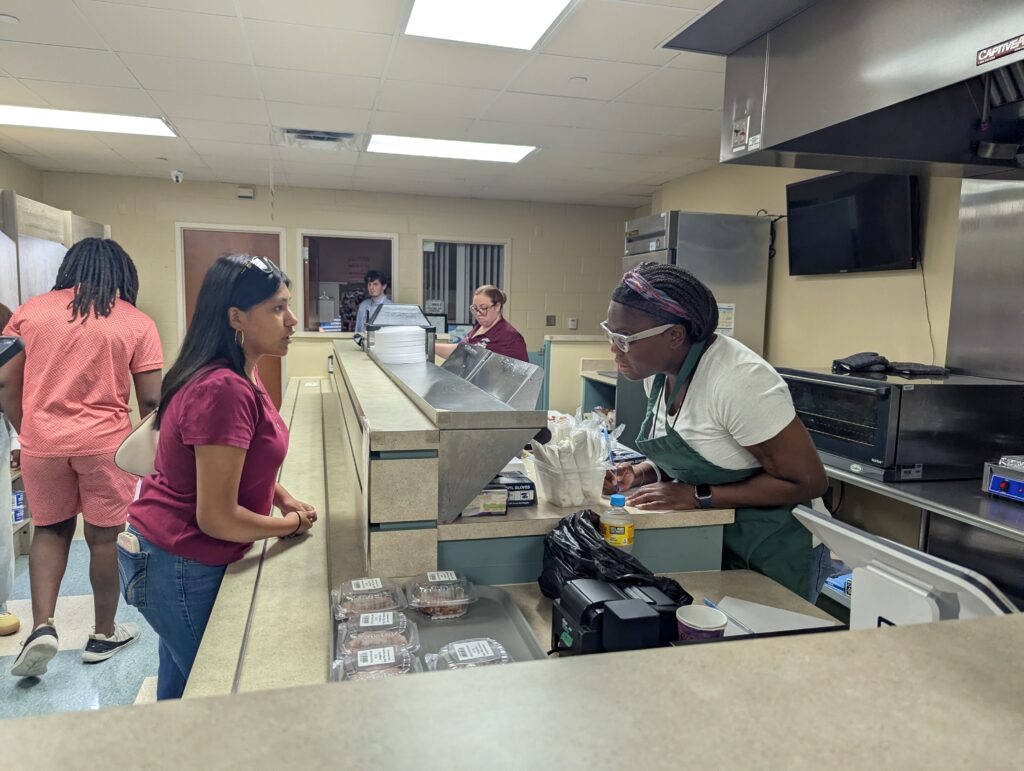
Several of our adult clients were particularly interested in the employment side of the programs, including Florida’s Business Enterprise Program (BEP).
BEP provides entrepreneurial opportunities in food service for eligible people who are legally blind. Participants can operate businesses such as vending facilities, snack bars, cafeterias, micro-markets, and highway vending operations. The program operates under the federal Randolph-Sheppard Act, along with Florida law that expands opportunities at state properties.
And we didn’t just hear about the program—we got to eat at one of the campus food-service operations!
Our group stopped for lunch at the snack bar, where we enjoyed burgers and other hot sandwiches while getting another look at vocational skills being put into practice.
Seeing What’s Possible
What made this visit valuable was the range of possibilities our clients were able to explore in a single day.
We saw accessible books and technology. We learned how audiobooks are produced. We explored spaces dedicated to developing independent-living skills. We talked about preparing for employment and running a business.
And different parts of the visit resonated with different people.
Some of our teens left thinking about what they might do after high school. Some of our adults came specifically interested in employment and entrepreneurship opportunities. Others simply had the chance to learn about resources they hadn’t experienced before.
Trips like this give our clients something that’s difficult to replicate in a classroom or conversation: the opportunity to see possibilities for independence firsthand.
We’re grateful to the Florida Division of Blind Services staff for welcoming our group and sharing the many resources available to Floridians who are blind or visually impaired.